Introduction: Beyond the Bachelor’s Degree
For two generations, the American career mantra has been clear: go to college, get a degree, secure a white-collar future. This path, however, has left millions burdened with student debt and entering an increasingly saturated knowledge economy. Meanwhile, a quiet revolution is rebuilding the literal and economic foundations of the country. Skilled trades—from electricians and welders to robotics technicians and solar panel installers—are experiencing a renaissance. This article explores the collapse of the “college-only” paradigm and the rise of “new collar” careers that offer six-figure salaries, high-tech work, unparalleled job security, and a tangible sense of building the future, proving that the most promising American job might require a toolkit, not just a tablet
I. The Perfect Storm: Demand Meets Demographic Crisis
A confluence of powerful forces has created a historic opportunity in the trades.
- The Infrastructure & Green Energy Boom: The bipartisan Infrastructure Investment and Jobs Act, alongside the Inflation Reduction Act, is unleashing over a trillion dollars into rebuilding America’s roads, bridges, railways, and energy grids. This requires an army of skilled workers to execute. Simultaneously, the transition to a green economy demands installers for solar arrays, heat pumps, and EV charging stations—jobs that cannot be outsourced or automated away.
- The “Silver Tsunami” Retirements: A massive generation of master tradespeople is retiring, taking decades of irreplaceable knowledge with them. For every two tradespeople leaving, only one is entering. This supply-demand imbalance is creating a severe talent shortage.
- The Crushing Weight of College Debt: With student loan debt exceeding $1.7 trillion, the risk-return calculus of a four-year degree is under scrutiny. Alternatives that offer little-to-no debt and immediate earning potential are becoming rationally attractive.
II. From Hard Hats to High Tech: The “New Collar” Reality
Forget the outdated image of a dirty, manual labor job. The modern tradesperson is a hybrid technician, problem-solver, and tech operator.
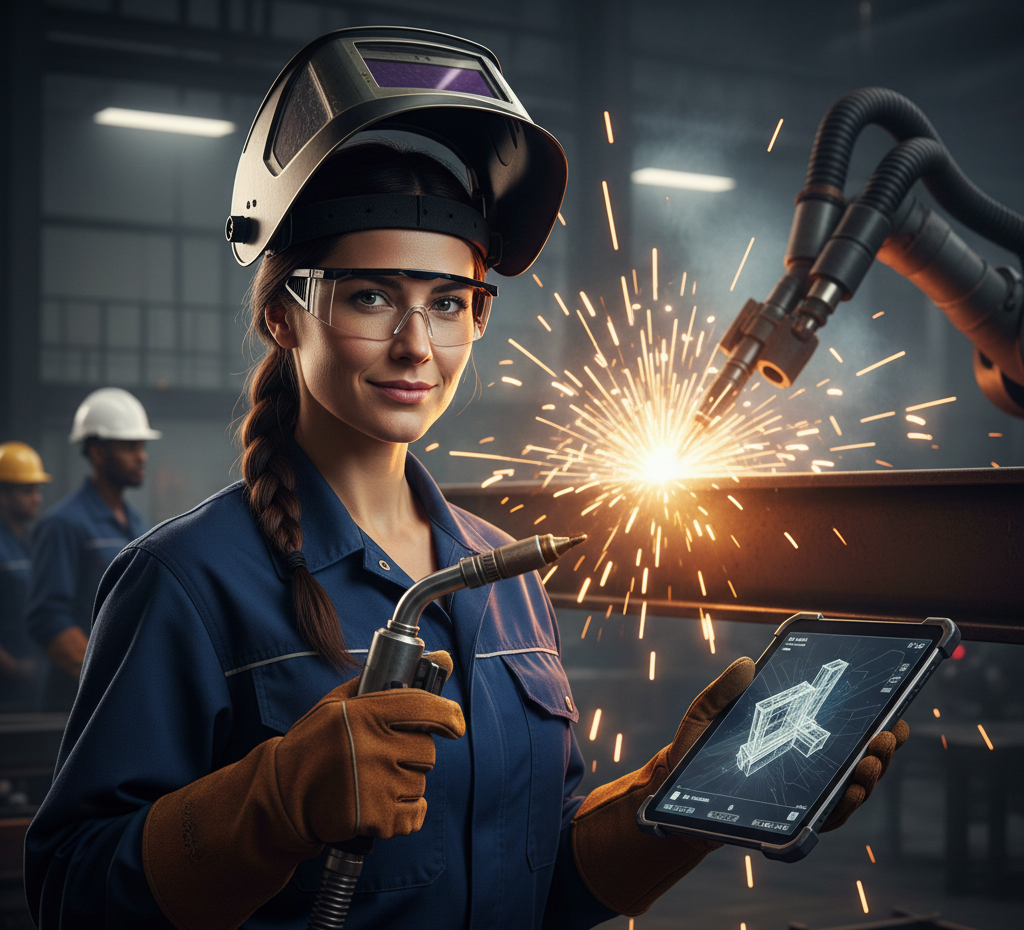
- Tech-Infused Tools: Today’s electricians use thermal imaging cameras and drone inspectors. Plumbers operate pipe-pressing tools with digital readouts and diagnose systems with augmented reality (AR) glasses. Welders program robotic arms and work with advanced alloys for aerospace.
- The Rise of Specialized Niches: High-demand, high-wage specializations have emerged: Building Information Modeling (BIM) Managers (the digital architects of construction), Wind Turbine Technicians (climbing 300 feet to maintain complex machinery), Smart Home Integrators, and Industrial Robotics Mechanics.
- Entrepreneurship as a Clear Path: The career ladder in trades often leads directly to business ownership. A licensed master electrician or plumber can realistically start their own contracting firm, a path to wealth creation far more direct than in many corporate careers.
III. The Economics of the Wrench: Debunking the Wage Myth
The financial argument for skilled trades is now overwhelmingly strong.
- Earning While Learning: Apprenticeship programs, typically run by unions (IBEW, UA) or contractor associations, follow an “earn and learn” model. Apprentices start at a percentage of a journeyman’s wage, receive incremental raises, and graduate debt-free with a recognized credential and often an associate’s degree. They are paid to get an education.
- Six-Figure Potential is Common: According to the Bureau of Labor Statistics, the median pay for elevator installers, electrical powerline installers, and radiation therapists is well over $80,000, with experienced workers and those in high-cost or high-demand regions easily surpassing $100,000, especially with overtime.
- Benefits Package Parity: Union trade positions come with robust benefit packages—health insurance, pensions, and annuity plans—that rival or exceed those in many white-collar professions.
IV. Breaking the Stigma: The Cultural Shift
The biggest barrier is no longer opportunity, but perception.
- A Campaign for Dignity: Organizations like Mike Rowe’s “mikeroweWORKS Foundation” and “Dirty Jobs” have tirelessly campaigned to recalibrate the cultural narrative, championing the intelligence, work ethic, and critical importance of skilled labor.
- Targeted Outreach in Schools: There’s a growing push to reintroduce and modernize Career and Technical Education (CTE) programs in high schools, showing students the high-tech, prosperous future available without a traditional four-year path. This includes partnerships with local unions and companies for hands-on learning.
- Diversifying the Field: A concerted effort is underway to recruit more women, veterans, and people of color into trades, breaking down historic barriers and broadening the talent pool. The image of the tradesperson is evolving to reflect the diversity of the nation.
V. Challenges on the Job Site: The Other Side of the Boom
The path is not without its obstacles.
- Physical Toll and Safety: These jobs remain physically demanding and carry inherent risks. Workplace safety, ergonomics, and managing long-term wear on the body are critical concerns.
- Economic Cyclicality: While currently booming, construction and related trades can be sensitive to economic downturns and interest rate hikes, though infrastructure and green energy work provides a more stable buffer than residential housing alone.
- The Speed of Technological Change: Workers must commit to continuous learning to keep pace with new materials, codes, and digital tools, requiring a mindset of lifelong adaptation.
Conclusion: Building a Literal and Economic Future
The skilled trades represent more than just an alternative career path; they are a fundamental recalibration of American value. They offer a powerful antidote to the anxiety of automation (you can’t fix a burst pipe via Zoom), the alienation of virtual work, and the debt of an oversold education dream.
Choosing a trade is no longer a plan B. It is a strategic, forward-looking decision to possess an irreplaceable skill set in a world that desperately needs to rebuild, rewire, and reimagine its physical infrastructure. The future of American prosperity and innovation isn’t just in Silicon Valley startups; it’s on the job sites, in the repair vans, and at the manufacturing hubs where things are made and fixed. The American Dream is being rebuilt, one skilled hand at a time.